
Media Psychologiy – Theories, Effects and Digital Dynamics
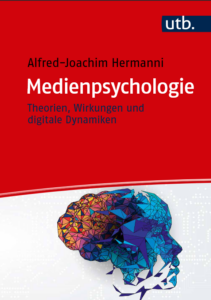
Prof. Dr. Alfred-Joachim Hermanni has spent decades exploring the interactions between media, communication, and human experience. In his new book “Media Psychology” (Medienpsychologie), he not only explains the core basic concepts and theoretical frameworks of the discipline, but also contextualizes media psychological questions within current social and political developments. Furthermore, he presents his own models that expand upon established approaches and open up new perspectives on the field. In the interview, he discusses the creation of the book, the significance of media psychology in an increasingly digitized world, and the challenges the field faces today.
Interview with Prof. Dr. Alfred-Joachim Hermanni
ZMK: Which questions in media psychology particularly fascinate you?
A.-J. H.: I am primarily interested in how media influence our perception, thinking, and decision-making. I find it especially fascinating that many media effects occur unconsciously and can still exert a significant influence on attitudes and behavior. At the same time, digitalization, social media, and artificial intelligence are fundamentally changing the conditions of media communication. This gives rise to new research questions that can no longer be fully explained by classical theories alone. My scientific work begins precisely at this intersection between established media psychology insights and digital developments.
ZMK: What motivated you to write the textbook “Media Psychology” (Medienpsychologie)?
A.-J. H.: In teaching and practice, I repeatedly noticed that classical theories are comprehensively presented in many textbooks, while current developments in the digital media world are predominantly covered in specialized academic papers.
My goal was therefore to combine both perspectives. The book conveys the theoretical foundations of media psychology while simultaneously showing how these can be applied to phenomena such as social media, influencers, algorithmic recommendation systems, or artificial intelligence. Furthermore, it was important to me to present research results in an accessible way and to illustrate their practical significance using numerous application examples.
ZMK: Your research includes “influencer illness”—what is that about?
A.-J. H.: With the term “influencer illness,” I describe a theoretically grounded concept that investigates potential psychosocial stresses associated with the intensive use of influencer content. The focus is not on general media effects, but rather on the question of what consequences can arise when people form a strong emotional bond with influencers over a longer period and increasingly adopt their lifestyle, values, or consumer recommendations. These processes are reinforced by algorithms that repeatedly display similar content, thereby further solidifying existing attitudes and behaviors. In such cases, critical distance, social comparison processes, and tendencies toward conformity can increase significantly.
The term “influencer illness” does not denote a medical diagnosis, but rather a media-psychological explanatory model designed to scientifically describe and better understand potential stresses and mechanisms of influence in everyday digital media use.
ZMK: In your book, you also deal with digital influence operations and psychological warfare. Why is this topic relevant to media psychology?
A.-J. H.: Today, digital media are not only used for information, but increasingly also for the targeted manipulation of perception and opinion-forming. States, organizations, and other actors use disinformation, propaganda, deepfakes, or algorithmically amplified content to influence political attitudes and societal debates, especially within the framework of military and informational operations.
From a media psychology perspective, it is particularly interesting what role mechanisms such as framing, priming, or agenda-setting play in this. Using current examples, the book shows how classical theories of media psychology can help to better understand and critically classify modern influence operations. Media literacy thus becomes an important prerequisite for democratic opinion-forming.
ZMK: How is artificial intelligence changing media psychology, and what developments do you expect?
A.-J. H.: Artificial intelligence is changing media psychology in multiple ways. On the one hand, new forms of communication are emerging through generative AI, personalized recommendation systems, and intelligent assistants; on the other hand, users’ perception, trust, and information processing are changing. In the future, research will need to examine more closely how humans communicate with AI, how trust in AI systems develops, and what the long-term psychological consequences of algorithmic personalization are.
At the same time, AI opens up new research methods for media psychology, such as through automated content analyses or the evaluation of large datasets. The combination of psychology and artificial intelligence is therefore likely to be one of the most dynamic research fields of the coming years.
ZMK: Where do you currently see the biggest research gaps in media psychology?
A.-J. H.: Many classical media effect theories were developed for traditional mass media and need to be further developed for algorithmically controlled platforms. The long-term psychological effects of personalized information environments, AI-generated content, and digital influence operations are still relatively under-researched. In my view, the interactions between information overload, disorientation, and mental health also deserve significantly more attention. Added to this is the question of how media literacy can be strengthened to effectively counter disinformation and manipulative communication strategies. Media psychology is therefore faced with the task of continuously adapting its theoretical models to the dynamics of digital media worlds.