Changing Photo-Ethnography

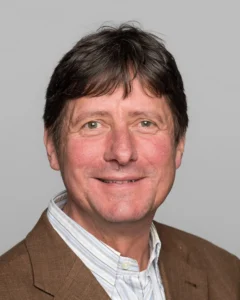
Ulrich Hägele is one of Germany’s most prominent scholars in the field of visual anthropology and photography. He teaches and conducts research at the University of Tübingen, focusing for many years on ethnographic photography, the history and cultural uses of photographic images, and the relationship between visual practice, scientific knowledge, and cultural representation. A particular emphasis of his work lies on how photographs are created, used, and interpreted in different social and cultural contexts. Through his research and publications, Hägele has significantly shaped the engagement with photography as an ethnographic and scientific medium in Germany. Furthermore, he is committed to visual anthropology and the academic engagement with current developments in photography.


Interview with PD Dr. Ulrich Hägele on Photo-Ethnography in Transition


You are known, among other things, as a “photo-ethnographist”—how do the two fields of photography and ethnography connect for you? How does your perspective differ from early perspectives, such as those of Franz Boas or Margaret Mead and Gregory Bateson?

U.H.: As an empirical cultural scientist, photographic recording is one of the most important tools in the research field for me. Photography can be used as a participant observer or actively to visually capture and document daily activities, people, objects, or humans depending on the scientific topic. However, photography and film can not only be tools, but also primary subjects of research.

The pioneers of visual ethnography you mentioned did not yet have a source-critical approach and were all caught in the tension of white colonialism—synonymous with racism, oppression, and exploitation. At the World’s Fair in Chicago in 1893, Franz Boas staged customs and lifestyles with Native Americans—the “Indians” had to let themselves be gawked at like in a zoo! Or Gregory Bateson: during the famous project in Bali in the 1930s, he didn’t ask much whether he was allowed to photograph the “native” villagers. His partner Margaret Mead even urged local people to stage their traditional customs and dances for the camera—meaning not in the evening in the dark as usual, but during the day. That would be an absolute no-go today.

What role do you think photography plays in ethnography today?
 
U.H.: Working with image sources—Visual Ethnography or Visual Anthropology, as my field of work at the University of Tübingen is called—explicitly includes still and moving images as well as drawings, caricatures, and other forms of visualization as sources. What was considered a marginal phenomenon not too long ago as an auxiliary science in art history, archaeology, folklore, educational science, or ethnography has developed into a discipline of its own. Of course, the topics to be researched have become more diverse and hardly manageable, not least due to the flood of images on the internet. However, visual ethnography also has a lot to do in the classic analog area of old photographs, Super 8 films, or photo albums. In addition, many images from earlier research projects and collections in folklore and empirical cultural science, as well as in ethnology, archaeology, and educational science, may not yet have been sufficiently evaluated—this alone would be a huge task, because our archives are full of images.
 
What can participatory photography achieve that photography produced exclusively by the researcher cannot? Can you give examples of this?

U.H.:
Participatory photography as a method in the field is also called substitutive photographic questioning. It originated in sociology in the early 1980s. The new thing about it: researchers no longer pulled out their cameras to document, but the subjects were given the task of documenting their daily lives for a week, for example—life within their own four walls, during leisure activities, or at the workplace. Simple Polaroid shots were very popular for this; the equipment was provided to the selected individuals. The researchers then evaluated the resulting images using so-called photo interviews depending on the scientific research question. Another way to participate in research is the photographic diary, which the test subjects also have to keep on a certain question over a period of time with their own images and texts. A disadvantage is the very large amount of work; the advantage: the protagonists can record their environment photographically or cinematically relatively freely without someone from science constantly buzzing around them. However, there is no such thing as an “objective” image. Even the pictures snapped by researchers are not free from subjective perception.
 
Much has changed in ethnographic photography due to digital visual worlds. Where do you draw the line between photographic documentation, staging, and generative image production?
 
U.H.: The boundaries are fluid and difficult to separate from one another. Actually, one should always look at the image to be researched with a critical eye regarding its sources—whether it was created as a documentary, as a staged selfie, or generated out of thin air with AI. The same applies to video clips and films. When you have the visual product in question in front of you for examination as an expression, or see it on the screen in digital form, then the laws of scientific image analysis apply, which of course includes the question of origin and authorship.
 
In your view, what has fundamentally changed in the status of the ethnographic image due to digital and generative image technologies?
 
U.H.: Whether something has fundamentally changed is a question I cannot answer for you yet. In visual ethnography, the image as a source is always in the foreground—regardless of whether it was created analogously, digitally, or with AI. Certainly, with programs like Gemini or ChatGPT, we have also gained new possibilities for image analysis. For example, if you want to geographically locate a photograph of unknown origin, that has now become possible with a few mouse clicks. But: during one of my recent teaching research projects in media science at the University of Tübingen, we wanted to know more about a collection of photographs from around 1905 with unknown provenance. The result with the AI tool was modest; we found practically zero, or some fantasies that led us astray. An article illustrated with pictures from our collection in the analog daily newspaper ultimately brought much more: we received letters and were thus able to clarify the context in which most of the pictures were created. AI only helps if there is a corresponding input or source on the internet.
 
Can an AI-generated image be understood as an ethnographic image at all if there is no camera and no photographic act in the classic sense behind it?
 
U.H.: Yes, I am sure of that. But as I said, the decisive factor is that you can find out the context of its creation. And that is not always easy in times of AI. Image-ethnographic research also includes propaganda photographs, photomontages, and caricatures, for example. This means that even the inflammatory and largely racist campaign images from the previous US elections—preferably about candidate Kamala Harris—can be the subject of ethnographic research, just like the self-creations of Donald Trump, who likes to see himself alternately as the ruler of the world, Jesus Christ, or the pope.

Are there aspects of historical photo-ethnography that are relevant—perhaps even surprisingly—to dealing with generative AI today?

U.H.: Perhaps when you look at the mass character of some collections. Here in a Tübingen archive, we have around 150,000 pictures by Heinz Pietsch, who photographed very unusual pictures of everyday life from the 1950s to the 1980s. Access could potentially be simplified with AI. But before that, all the analog-preserved images would first have to be made digitally readable. And that costs time and money. Otherwise, AI could be used—possibly for teaching and illustrative purposes—to generate images of historical events that never happened. An example would be the video clip circulating on the net with the fictitious, artificially generated interview with passengers and crew members of the Titanic from 1912. Done seriously, it would have to be noted in any case which tool was used and what prompts were entered for it.