AI and Art
Artificial intelligence (AI) can create works deceptively resembling paintings, graphics, or photographs. This article examines how to treat these works, and under what circumstances, if any, they should be understood as art. The focus is placed on the work itself in the l’art-pour-l’art-tradition, on the reception, on the skills involved in the creation, and on the authors themselves. Besides looking at literary sources touching on the aforementioned aspects, the evaluation considers the perspective of people with an affinity for art through in-depth interviews. Most interviewees revised their initial reaction after learning that the works were AI generated, being more skeptical about their status as art. It then becomes obvious that the role of the artist is undergoing change. The confrontation with the artificial brings the human creator into the foreground and makes them inseparable from the work. The new technical-cultural situation leads to a new, more contextual evaluation of art.
Interview with Prof. Dr. Maja Tabea Jerrentrup on AI and Art:
AI is supposed to wash my laundry and clean my apartment—not make my art! Should we view it as a disadvantage that AI has advanced so far specifically in image and text generation?
MJ: The fact that AI is taking over exactly what we not only enjoy doing, but what defines us as human beings—not just logical thinking, but creativity and imagination—hurts us and cuts deep. Who are we if these things no longer distinguish us? What is left for us humans?
However, there are also advantages. It is still a human who prompts and selects based on their preferences. Unlike traditional arts, this doesn’t require lengthy training, money, and time; one can create visually appealing and personalized works in an instant. The software is accessible to anyone with an average computer or smartphone, and even with subscription models, it costs a fraction of what a painting course or photography equipment would. This characteristic of AI can be described as democratization.
Is it even desirable for art to be democratized to such an extent? Doesn’t that inevitably lead to kitsch?
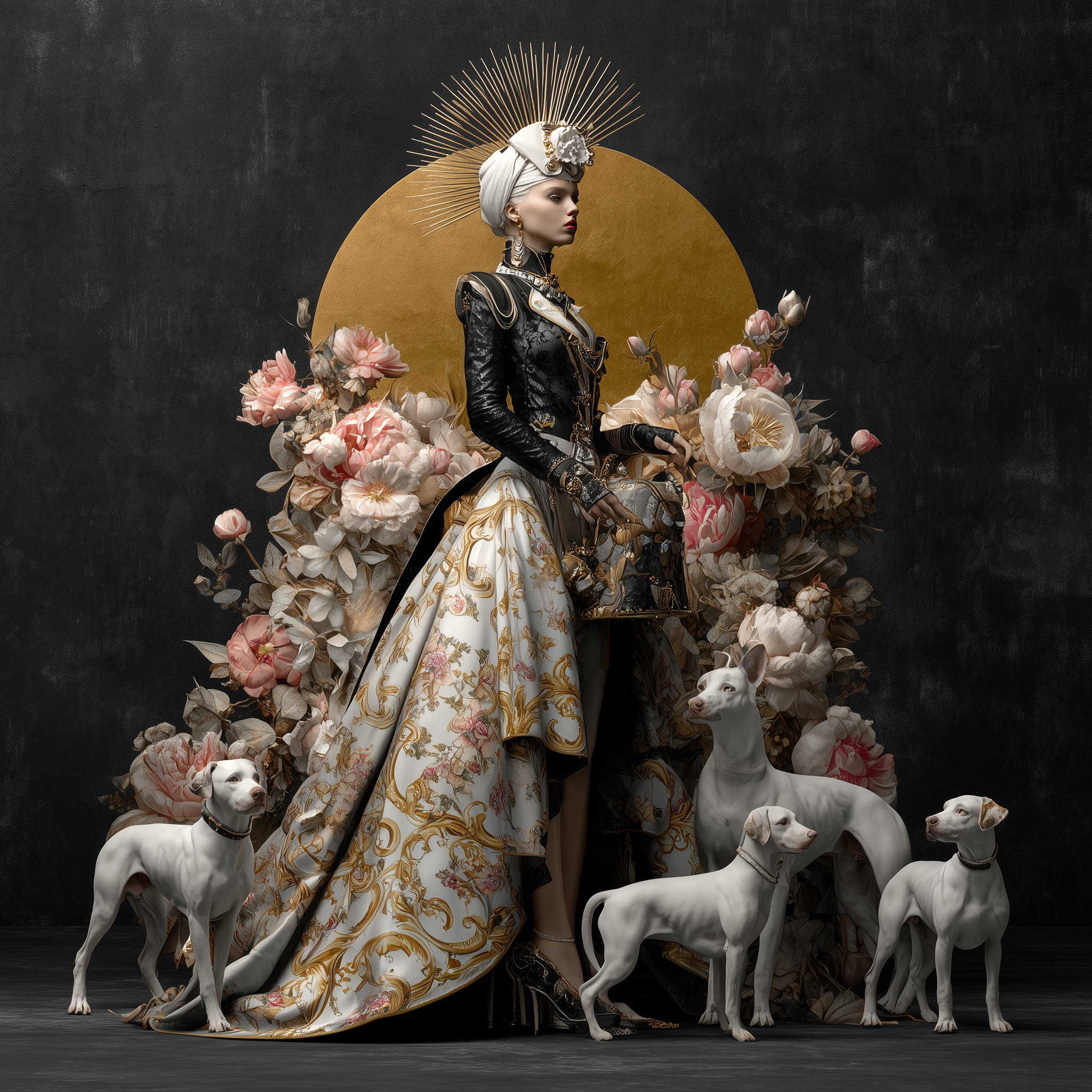
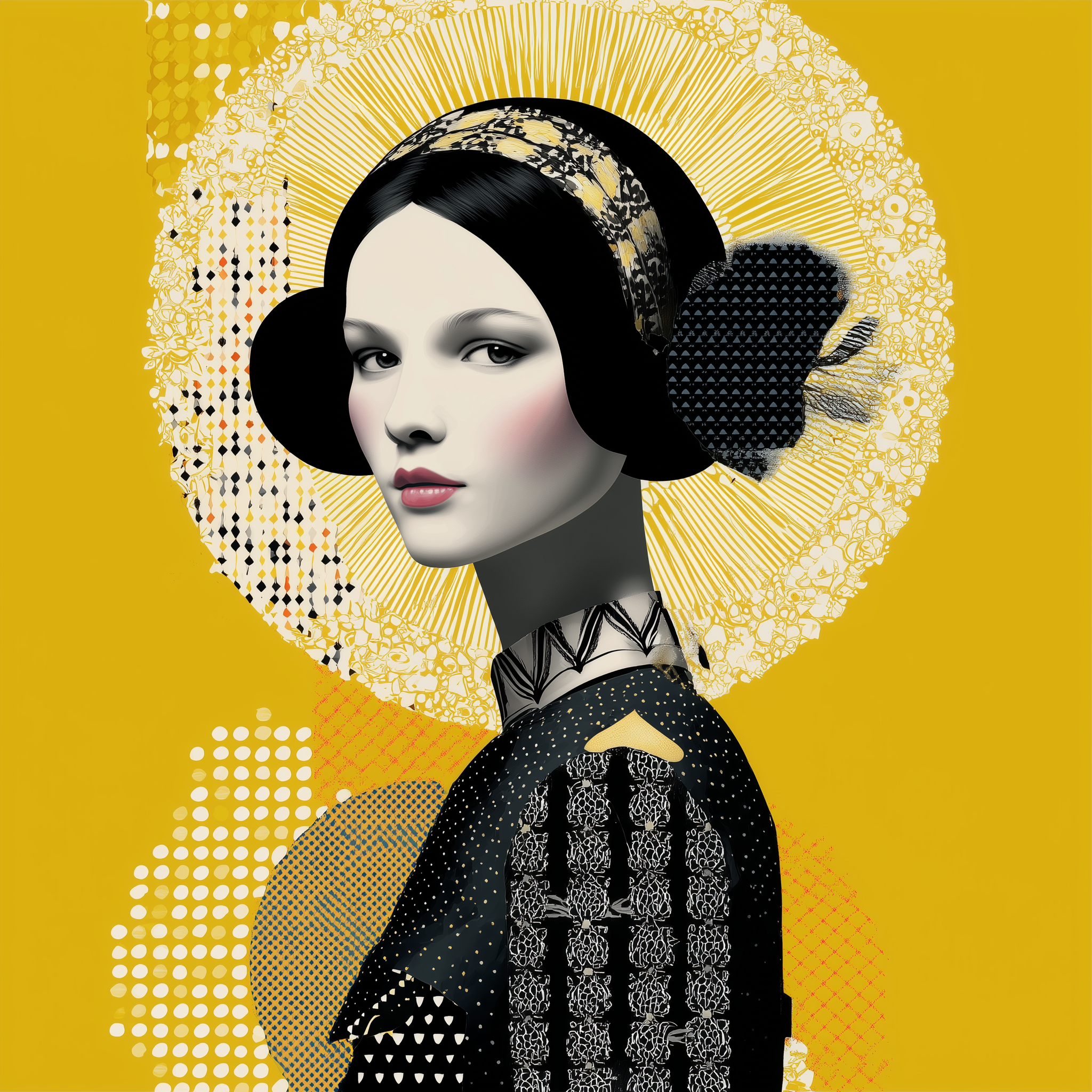
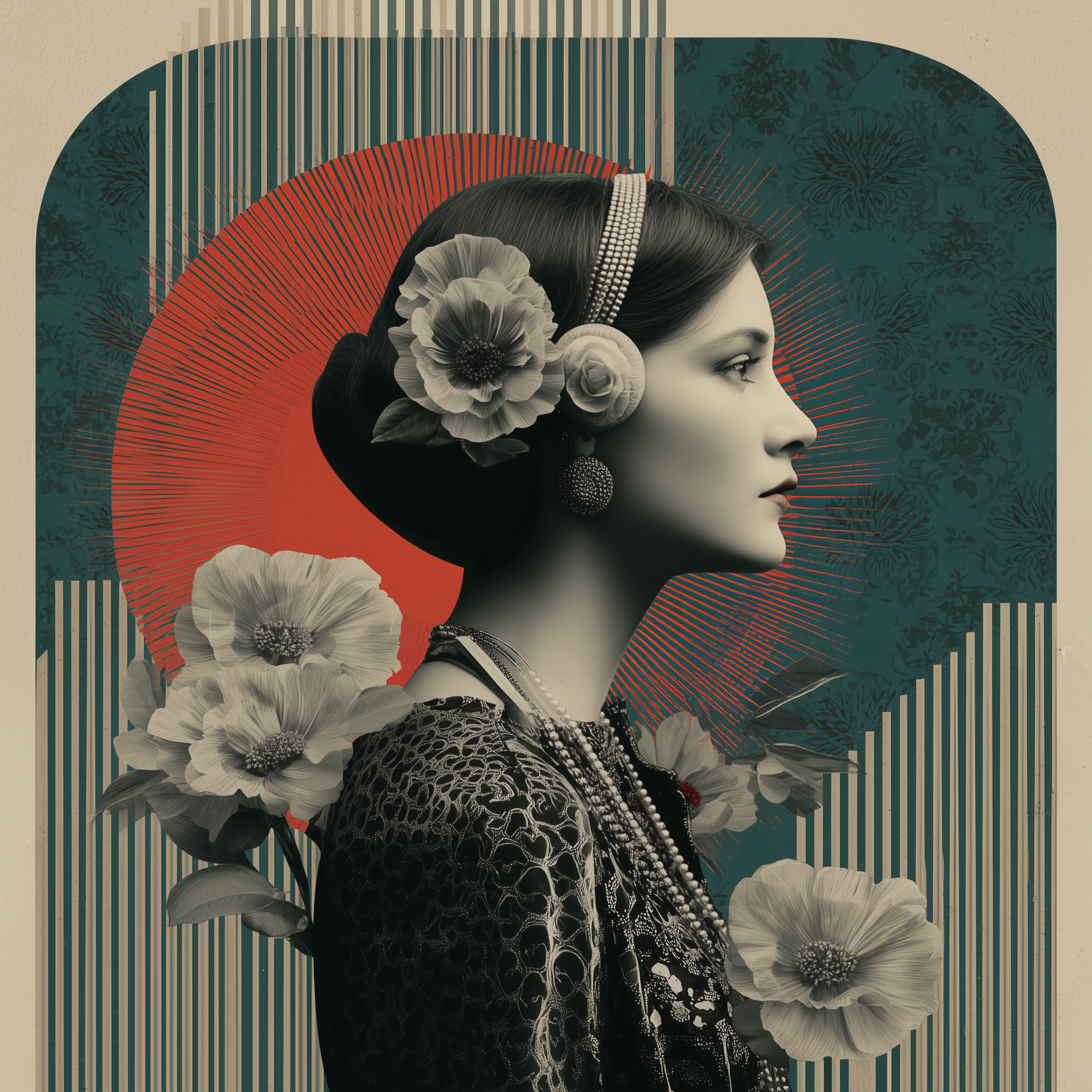
MJ: There is already something described as “AI Aesthetic”: the faces are a bit too flawless, the necks too long, the colors too vibrant. This is often labeled as kitsch. However, I find this term to be elitist and ethnocentric. Why should the “taste of the masses” inevitably be considered inferior? History has shown often enough that a style frowned upon today can be back in trend tomorrow. Passing judgment on art is difficult because, as Arthur Danto said, there is no specific way that art is “supposed” to look.
But isn’t the “labor” missing if something can be produced with just one click?
MJ: Labor or effort can indeed be seen as a central concept, often linked to the “heart and soul” an artist pours into their work. However, to be consistent, one would then have to question Pollock’s drip paintings, Rothko’s color fields, Duchamp’s Fountain, and indeed large portions of modern art. Effort is not a sufficient criterion.
Shouldn’t art at least provoke thought?
MJ: It can… but it doesn’t have to. Religiously motivated art was intended more for contemplation or storytelling. Much of non-European art serves rituals or emotional resonance. Provoking thought is only one of many tasks. Sometimes, pure enjoyment is simply the priority.
What does this development mean for practicing artists?
MJ: Art has always been in flux. With the advent of photography, painting was declared dead. I assume that art—including traditional art—will continue to exist, but the process may become more important. With some works, it really matters how it was created and why. It is only with that information that I can appreciate it. For others, the method of creation—AI, painting, photography, whatever—is relatively secondary.
Practicing artists must position themselves clearly as before, develop a profile, and justify why they made certain decisions. This requires cognitive skills and the ability to articulate oneself. On the other hand, an artist’s charisma and personal story also play an important role. Artist biographies are significantly more popular than those of scientists, for example. People are interested in artists—this, I hope, ensures their continued existence.